Tag Archive | writing tips

The Mystery of Mysteries: 16 Steps to Writing the Cozy Mystery

Since I am currently writing a mystery and I have not written in that genre before, my eye is drawn to any post about writing a mystery. Here is a short one by Sharon Arthur Moore. She also has a link about a previous post about “traditional” mystery writing.

The Mystery of Mysteries: 16 Steps to Writing the Cozy Mystery » Writeonsisters.com.

Craft Dynamic Antagonists Your Readers Will Love—in Just 3 Steps!

K.M. gives us some clear ideas about villains and why they are important in the story. The she tells you – again, very clearly and simply – how to use them in your story. I would have to agree. Villains are so very fun to write about.

The villain in my Agnes story (a MG mystery-adventure story) is not know about directly for most of the story. This will make it more tricky to keep it interesting. I guess that’s where the mystery and adventure come in.

Craft Dynamic Antagonists Your Readers Will Love—in Just 3 Steps! – Helping Writers Become Authors.

25 Things You Need To Know About Writing Mysteries

15887460636_31f36d6622_nI’m working on an adventure mystery book of sorts, so I have been keeping my eyes open for information about writing mysteries. I picked a couple books out of the library; one on Istanbul: “Istanbul, Memories and the City” by Orhan Pamuk, because my 12 year old protagonist – Agnes Kelly – is going to be traveling to Istanbul; two on mystery writing: “How to Write Killer Historical Mysteries” by Kathy Lynn Emerson, which I’m part way through and have learned some good tips, and “How to Write a Damn Good Mystery” by James N. Frey, which I think has been the most helpful. A fellow mystery writer and writing instructor, Christine DeSmit, recommended “The Writer’s Journey” by Christopher Vogler to me, which I had already read, but will probably skim again.

I also came across this post by Susan Spann that I thought might be helpful to you as well. She has some very good points, many similar to what I found in these two books.

25 Things You Need To Know About Writing Mysteries, By Susan Spann « terribleminds: chuck wendig.

my imageCKBook Publishing
Where Publishing Dreams Become Reality

7 Scientifically-Proven Tips to Hook Readers that Every Writer Should Know

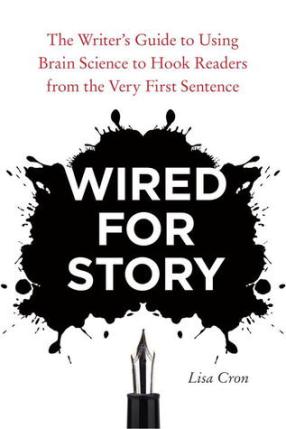
Alex Radcliff summarizes some key points to a story from the book “Wired For Story.” I haven’t read it but it sounds like it would be worth taking a look at.

A must read for any author is “The Writer’s Journey” By Christopher Vogler. I also like the book, but not the title so much, of “Techniques of the Selling Writer.” by Dwight Swain. I don’t like the title because it implies that the only reason we want to create a good story is to make money. Of course I want to make money with my stories, but to do that you have to write a good story, and to write a good story, you have to write for other reasons than money!

7 Scientifically-Proven Tips to Hook Readers that Every Writer Should Know | Alexis Radcliff | Lexirad.com.

my imageCKBooks Publishing
Where Publishing Dreams Become Reality

How to Kill Adverbs and Adjectives

Ryan Lanz (I think that’s his name. I couldn’t find his name of his website but that is his URL so I thought it might be a good guess) has some good advise for writers.

Keep the Writing Flowing

Donna Hockey has some good points when it comes to how to keep the writing going. I would add another that she somewhat implied in her title – writing scene to scene.

The is much written out there about writing the beginning of your story: It has to set the scene – introduce the time, the characters, the surroundings; to name just a few, it has to post a question(s) for the reader – a question so good the reader is “hooked” and wants to come back time and time again to find out the answer .question

And the end, well, the end sometimes just writes itself, or it’s something easier to figure out than the middle. You don’t hear much about how to write all the stuff in the middle. Yes, there has to be conflict and stumbling blocks for your protagonist to overcome, but what does that mean, exactly!

What I recommend to writers is the write scene by scene. You can make up an outline of the whole story, if you like, if that makes your thoughts flow better, makes you feel more organized, but don’t be surprised if your characters take your story in another directions. Then set the outline aside and start writing. Take the beginning of your story and decide (after the first upset) what your character is going to do next. Just pick something.arrows If you don’t like the direction you character chooses, then cut it later, but for now, just pick something for your character to do, put them in the next place (Alaska, California, their neighborhood park…), with the next set of characters (a flight attendant, a lifeguard, a homeless person…), in the next set of circumstances (trying to escape what just happened to them, trying to find a missing relative, encountering someone who helps push them on one direction or another…). At the end of this scene, something has to have changed, or something has to have happened. It has to propel the character(s) forward in some – maybe small – way, or at minimal is a set-up for something that will happen in the future.

I think the middle is best written this way, scene by scene. I don’t think it feels so daunting this way and if you do as Donna suggests (a very good idea, if it works) and you leave your days writing at a place where you know the character will be next, that will jump start you into your next scene when you again sit down and put pen to paper or finger to keys – whatever your form of poison may be.

The Moveable Writer | New technology and old comforts for today’s writer..
Take It Easy With the Thesaurus

thesaurusLiz Bureman on thewritepractice.com makes a few good points about using a thesaurus. You have to be thoughtful with word use, thesaurus use or not. My favorite thesaurus is “Roget’s International Thesaurus,” It is so all encompassing for word derivations, if you can’t find a word in this book you want to use, I’d just give up.

Take It Easy With the Thesaurus.

Write Tight Site | Tight Writing Tips

I came across this site while I was looking up how to cut down on the use of prepositions in writing. Looks like a very good site, so I though I’d pass it along. The blog owner is a person by the name of Ann.

Thanks Ann and Happy editing!

Write Tight Site | Tight Writing Tips.

On Writing – A Memoir of the Craft by Stephen King

kingI usually write my book review on my personal blog: ckbooksblog.wordpress.com, but today I am putting my book review here because this is a book that a writer might be more interested in reading.

Genre: Memoir/how to (? – really unsure how to categorize this one)

Blurb: (from Goodreads) Rarely has a book on writing been so clear, so useful, and so revealing. “On Writing” begins with a mesmerizing account of King’s childhood and his uncannily early focus on writing to tell a story. A series of vivid memories from adolescence, college, and the struggling years that led up to his first novel, “Carrie, ” will afford readers a fresh and often very funny perspective on the formation of a writer. King next turns to the basic tools of his trade — how to sharpen and multiply them through use, and how the writer must always have them close at hand. He takes the reader through crucial aspects of the writer’s art and life, offering practical and inspiring advice on everything from plot and character development to work habits and rejection.

Serialized in the “New Yorker” to vivid acclaim, “On Writing” culminates with a profoundly moving account of how King’s overwhelming need to write spurred him toward recovery, and brought him back to his life.

Brilliantly structured, friendly and inspiring, “On Writing” will empower — and entertain — everyone who reads it.

(Usual blurb – lots of spin!)

What I liked: It was interesting learning about Kings life. I had no idea (I won’t give anything away here in case you want to read it and don’t know anything about King, like I didn’t.) It is also interesting to hear what he thinks is important related to writing and story. He also has a list of books he has read that he likes. An interesting list as well.

What I didn’t like: Some of his recommendation/tips about writing are pretty vague. I think this is in part, because he has a pretty strong innate skill with writing. He would have to to be able to write and deal with the things he had to deal with (sorry, have to read the book to find out!)  e.g., When talking about dialogue, he says to be truthful (so a similar word). Sorry – not very helpful. I read one review of this book where the reviewer thought he was condescending. Maybe a little, but as a fellow writer put it – I guess he might have a right to be a bit condescending. I guess I would agree. He does know what he’s doing as his books and his readership will attest to.

Rating: 4/5

7 Writing Lessons from Gabriel Garcia Marquez

Some ideas about writing from Joe Bunting and Gabriel Garcia Marquez.

I don’t think you have to be a journalist to write well, but I do agree with the idea of keeping it “real.” Fiction mixed with real life is always more believable. I have not read Marquez myself but I put him on my to read list. I like magic. I’ll blog a review when I get around to reading his book(s).

7 Writing Lessons from Gabriel Garcia Marquez.