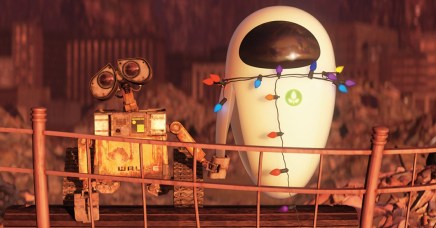
For you screenplay (or stage play) writers out there. Some insight about the subtlety (or lack there of) of showing affection on screen from Travis Maiuro.
Source: Four Ways of Expressing Love in Your Screenplay – The Script Lab
For you screenplay (or stage play) writers out there. Some insight about the subtlety (or lack there of) of showing affection on screen from Travis Maiuro.
Source: Four Ways of Expressing Love in Your Screenplay – The Script Lab

By Teodora Zareva: How This Couple Turned Teens’ Love of Texting Into Love for Reading Books | Big Think
Now this is an interesting concept. How many of you would like to read a book this way? Personally, I try to find ways not to be on my phone, but I suppose, waiting at the doctor’s office or someplace else, it might be handy, but it would take me a long time to get through a book.
I can definitely see it for teens though. And for the people that think it corrupts the reading of books . . . Just like comic books, anything that can get younger people reading is fine with me. Is this going to be your next novel?!

CKBooks Publishing
Where Publishing Dreams Become Reality

Here is a great post from Jerry Jenkins for any writer. There is also a pdf with the words for future reference.
Thanks Christopher!
The Story Reading Ape (Link)
Dawn Field has written this post that I thought might be helpful to you memoir writers out there. I wrote a memoir myself (Living in the House of Drugs), but it wasn’t my memoir so I had a few other things to consider.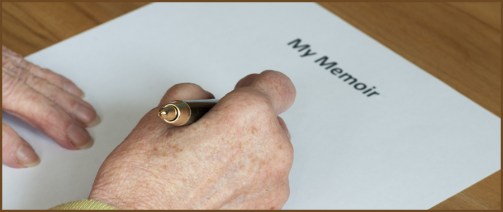
As with any book I write, I did some research by reading and skimming many other book of the same genre. This gave me an idea of what was out there, what type of story telling I liked and how I might make the memoir I was writing a bit different. Dawn gives you a few other things to consider. I especially agree with her that most good memoirs have a message they convey (think Eat Pray Love or Wild) but they all don’t. Some are just good stories (like Angela’s Ashes).
The other thing to remember when writing a memoir, the more you write it using the structure of a fictional story, the easier and more enjoyable it will be to read. This is something to keep in mind when you’re trying to decide on tense, use of quotes (or not), use of dialogue, story structure…
(Note: this post is taken from the BookBaby blog. This does not mean I am endorsing BookBaby. Though I haven’t heard anything particularly bad about them, always read the fine print related to upfront or down the road fees when going with any service – mine or anyone elses 🙂
Dawn: “Memoirs are their own class of writing, but they have to adhere to the principles of storytelling. Here are 4 things to consider when you write your memoir.”
Source: Four Things To Decide Before You Write Your Memoir | BookBaby Blog
CKBooks Publishing
Where Publishing Dreams Become Reality
 K.M. Weiland has a wonderful blog for writers, if you haven’t already seen it. In this post she talks about how writers make readers care about what is going on in a story, which should be a lot of conflict or things that get in the protagonist’s way of their goal.
And by the way, have a wonderful holiday and an even better New Year!
——————-
To reach your goal of writing gripping and intense story conflict, you must first learn how to make that conflict matter to readers. Here’s how!
Source: The #1 Way to Write Intense Story Conflict – Helping Writers Become Authors
 CKBooks Publishing
Where Publishing Dreams Become Reality
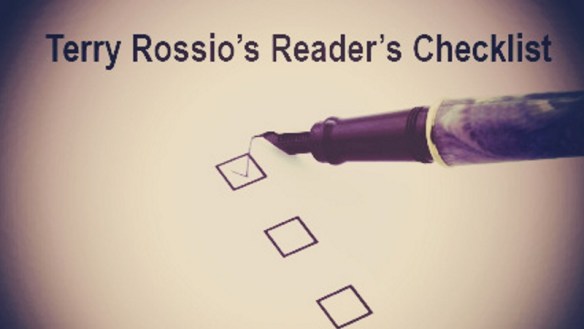
For those of you have been attached to this blog for a while, you know I wrote a screenplay for my book A Burnished Rose – which is about a nurse in WWII. I am still working on pitching and improving that one but I’ve started on a new project – a screenplay for my 2016 Moonbeam Book Award winner Intrigue in Istanbul: An Agnes Kelly Mystery Adventure, which is about a young girls adventure in Istanbul with her grandmother.
I wanted to make the process a bit easier on myself, so I started looking around for a program I could use to write it – mostly something that did the correct formatting for me. Believe me, it doesn’t format easily in word.
From my Wisconsin Screenwriters Forum group, I had heard of Screencraft’s screenwriting contest. Well it happens that screencraft has developed some screenwriting software called Writerduet, one version that you can get for free! (Just my price range!), though the paid version is less than $100, so it’s pretty reasonable too.
I’ve been using it for a few days now and I really enjoy it. It does make the process a lot faster and has a collaboration feature that may come in handy WHEN the screenplay wins in a contest and gets picked up by someone!
When you sign up for the software, they get your email, of course. So I’ve been getting lots of screencraft advertising, of course. But I also received a link to this post by Terri Rossio, which is a wonderful list of what a good screenplay looks like.
Source: A Script Reader’s Checklist – ScreenCraft
Do take a look and take some notes, if you’re a screenwriter yourself.
Happy writing!
 CKBooks Publishing
Where Publishing Dreams Become Reality

Originally posted on Chris The Story Reading Ape’s Blog: Originally posted as the Dun Writin’—Now Whut? series on this blog, EDITING 101 is a weekly refresher series for some of you and brand new for others. Courtesy of Adirondack Editing He Said / She Said: Dialogue Tags “Can you pass the salt?” Richard asked. “Like hell,” Katherine muttered. “Did…
via EDITING 101: 06 – He Said / She Said: Dialogue Tags… — Don Massenzio’s Blog
CKBooks Publishing
Where Publishing Dreams Become Reality

Oh, the humanity: Am I the only writer who fears he’s lost the magic every time he sits down at a keyboard? Ah, but then what made me think I had any magic to begin with? Writers wear two colognes, “l’insecurite” and “l’arrogance,” and never have to purchase either one–they’re pheromones. “Writers rush in where […]
via Finding a Publisher — Mitch Teemley
CKBooks Publishing
Where Publishing Dreams Become Reality

Janice Hardy give writers some practical information about how to make sure your plot and your scenes are needed for the story and some ideas on how to correct things if they are not.
Source: Author, Jody Hedlund: 5 Reasons Your Plot Stalled
CKBooks Publishing
Where Publishing Dreams Become Reality

I am currently in the midst of genre switching, so this post by Loretta Milan caught my eye. Most of my books (5) are historical fiction. I have one memoir I wrote for a friend (Living in the House of Drugs) – a recovering addict and alcoholic – but I don’t think that really counts. But my newest book: Intrigue in Istanbul – An Agnes Kelly Mystery Adventure, not only is it a new genre but it’s a new audience – Middle Grade! What I’m noticing is that the audience isn’t so much of a challenge; so far they seem to like my book (adults too, which was my goal – Yah!), it’s more that it’s a whole new market. How to sell to middle graders, middle grade parents, and middle grade teachers? I’ve reached out the teachers I know in my area and who I know (see the post of my recent visit to a 6th grade classroom who read my book), so now I’m trying to think of ways to stretch my reach farther. I’ve entered contest, but those will take until the fall to get any results, so I have to look to other avenues.
I like the 5 points Loretta makes in her post.
Here’s how it starts:
Many writers dream of achieving what Rob Bryndza had. Not just a bestselling book, but a bestselling series. So why risk it all by switching genres? But, that’s exactly what he did, and now The Girl in the Ice has become an international bestseller, I wanted to discover how this comic, turned romance novelist, turned crime writer made a success of it all. So, I was delighted when he agreed to a chat.
Source: Five ways to succeed at genre switching | Literary Lightbox
 CKBooks Publishing