Do I Need a Platform and If So, How High?

Anne Greenwood Brown talks about platforms for authors. She showcases a fiction author who’s book has in interesting premise – celebery crushes.

Notice she says getting a following can take years. I think she’s right, for most of us authors, so patience and persistance is a must, whether you’re going the traditional route or self-publishing.

Have a read…

————————

In 2010, when I first dipped my toe into the publishing world, the biggest mystery to me was—besides figuring out the difference between a query and a synopsis—this thing called a “platform.” At th…

Source: Do I Need a Platform and If So, How High?

5 Essential Pieces of Advice You Need to Hear Before You Publish – Updated

Some really good points from Books Go Social personality Elisabeth Schaffalitzky (say that five times fast!) about publishing for those who have yet to publish and even for an established author. (Link below) They polled their author readers and got these 5 things authors wish they knew before they published the first time.

(Note that professional editing is #1)

———————————-

So you know you want to succeed as a writer. You have a story to tell, you think you’re good at it, and you think other people would agree! However, the will and the motivation to write aren’t enough.  …

Source: 5 Essential Pieces of Advice You Need to Hear Before You Publish – Updated | The BooksGoSocial Blog

Amazon Eliminates Two Promotional Options 

Amazon is shutting down it’s giveaway option (which was a great promtional tool) and it’s matching program (which allowed a reader who bought your print book to buy the ebook at a reduced rate).

I didn’t know this, so I wanted to make sure you-all had heard.

—————————-

Source: Amazon Eliminates Two Promotional Options | Self-Publishing Review

Stop Calling It Vanity Publishing

Are you a vain publisher if you self-publish?
I don’t think so.
Maybe Persistant Publishing
or Uncompromising Publishing
or …

lgould171784's avatarThe Let's Play Ball Blog

1231021950More than a decade into the self-publishing revolution, it’s hard to believe we’re still being subjected to dire warnings about “vanity publishing.” Can there possibly be a more tired phrase than that? If it’ll do any good, I’ll admit that I’m vain. Whenever I publish, I chose to pay dearly for the privilege. A complete package includes professional covers, copyrights, thorough editing, and at least rudimentary marketing. Those don’t come cheap, and all are absolutely essential for even moderate success.

Like many other aspiring authors, I have found the traditional path not totally unresponsive to my queries, yet ultimately unsuited to my type of writing. There are simply too many rules. I like to mix genres, which makes it next to impossible to fit into a publishing niche. My novels start out as chicklit, but then I complicate things by adding healthy doses of social and/or political commentary. Not an…

View original post 149 more words

Current Trends in Traditional Book Publishing: Fiction, Nonfiction and YA 

Jane Friedman has updated us on the currect trends for traditional publishing, but I’m guessing some of what is happening in traditional publishing is happening is self-publishing as well.

Keep in mind, what is trending now might or might not be something you want to look at writing.  It takes time to get a book out, a good book – well written, well edited, well designed and proofed. And self-pub authors in particular need to take that time. Sometimes you only get one chance with a reader.

So unless you’ve got the inside scoop on what will be the next big thing in writing, it’s usually best to stick to writing what you are passionate about.

But that is just my opinion. 🙂

———————–

The rise of Millennial nostalgia and graphic novels, the decline of political tell-alls and publisher-driven marketing: all of this and more in 2019 trends.

Source: Current Trends in Traditional Book Publishing: Fiction, Nonfiction and YA | Jane Friedman

Book Banning – Is it Right?

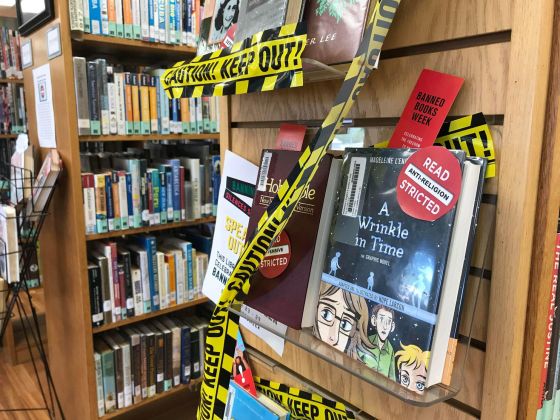
With the fairly recent (in our countries history, that is) ease of self-publishing, the notions of free spreech and no book banning are getting harder to defend.

Is it okay for people with, what the average person would say are, really out there ideas (e.g., the holocaust never happened, the government really took down the twin towers in NY…) to publish those out there ideas?

And what about hate speech/writing? Is that all right to sell in your local bookstore?

Read Ron Charles’s post on the Washington Post’s website and let me know what you think.

——————————-

Confessions of an accidental censor.

Source: A hateful, conspiracy-filled book just got harder to buy. That’s no cause for celebration. – The Washington Post

What’s in a Word Count: Novelettes, Novellas and Short Stories


Ever wonder what to call your story? Is it a novella, a novelette or perhaps a short story. Wendy Delmater explains the differences and gives her opinion on work count and writing – something I agree with, btw.

———————————

Source: » A Professional Editor’s Perspective on Novelettes and Novellas

Clutter-Free Writing Space: Writescape Guest Post

What’s your writing space like?

Bronwyn@ Small House Big City's avatarSmall House Big City

I’m posting my recent guest blog post on the wonderful site Writescape.ca. Their fabulous blog ‘Top Drawer’ is a treasure trove of writing hacks and inspiration.

https://writescape.ca/site/2018/12/the-minimalist-writer/

The Minimalist Writer

Open concept is a must in all modern IKEA-catalogue-worthy homes. The glossy photos selling Swedish furniture promise you zen and relaxation. The reality is, unless you are living in a staged home, the open-concept layout likely means you’re being more overwhelmed by constantly looking at your overstuffed abode.

And for some writers, that can be deadly.

When you don’t have an uncluttered space to disappear to, your ability to hunker down and write can be seriously hampered.

Yes, you can write amid household chaos, but on some level you will always be fighting the distraction. It’s something I’ve had to struggle with until I found a solution.

Writer in a small house

Without a basement rec room, our main floor…

View original post 544 more words

The Down Side of Signing a Book Contract 

I agree with this writer, we spend a lot of time talking about how to get published and not enough time about what to do after you sign a contract with a book publisher.

This author got into hot water thinking she had made it; she signed with one of the big 5 publishers and then another publisher. She got a nice, big advance and was working hard on her craft. What is so bad about that? I’d be excited too. I’d have thought I’d made it too! But she tells us what happened next.

Source: How To Lose A Third Of A Million Dollars Without Really Trying

Are these reasons to avoid traditional publishing. Mostly, I’d say no. But it does help you understand how the traditional book world works, and if you end up signing a contract that is associated with an any kind of an advance, you need to know what to expect and not expect from that publisher or agent going forward.

The decision to pursue self-publishing over traditional publish still is mostly about your goals, your time, and your budget. But it is good to know what you’re getting into when you sign the dotted line!

Stay Away From Traditional Book Publishing?

Image result for authors signing books images

Dean Wesley Smith really doesn’t like traditional publishing (see link below). I’m not as dead set against it as Dean. I think it might be right for certain people – not for me, mind you – most of the time.

I have tried to find an agent for my middle grade novel series (my Agnes Kelly Mystery Adventures) to try and traditionally publish, to get greater access to the school market. But it has gotten into 3 schools anyway, through people I know who are middle grade teachers and one teacher who found me at a book sale and really liked my book. So it is still possible to get into schools, but it’s not easy.

In general, however, I find I like the creative control – of the writing, of the cover, of the interior design (which is why I help others with these tasks as well 🙂 )- and I like the control of when it gets out there and how much I am selling it for (besides a significant royalty over traditional publishing). Of course, that means me taking on the risks – paying for editing, taking the time to find out what the process is and how best to do it, keeping abreast of the book business…

Since most of the time with a traditional publisher you have to do most of the marketing anyway, why give them rights and lose the control, and wait and wait for the book to come out and make changes to it that you may or may not agree with and… Well, you get the point.

But for some who don’t have any interest in the process, can be patient, and don’t want to put any money into the game, or want to get to a difficult market – such as my example of getting into schools – it might be the way to go.

The point is to know what you’re getting into with either direction.

—————————–

Source: Stay Away From Traditional Book Publishing