Archives

A Ruling Related to Copyright and AI

Interested in the topic of AI and copyright? This post tells of a recent ruling on the topic.

Copyright’s Big Win in the First Decided US Artificial Intelligence Case

It related to a case about use of AI with training material, as far as I can tell, but it does set a precedent for other cases sure to ruled on next.

CKBooks Publishing
Where Publishing Dreams Become Reality

The Copyright Office’s Webinar on Leveling Up Your Copyright Public Records Search 

Checking out copyright can be quite a task – I did it for some song lyrics for my first book (Rosebloom), so I speak from experience. So when I saw this article, I wanted to share it, in case any writer out there might be looking for copyright information.

————————

On August 1, 2024, the Copyright Office hosted a public webinar, Level Up Your Copyright Public Records Search, sharing ways of searching copyright public records using our pilot of the new Copyright Public Records System (CPRS). CPRS is an easy-to-navigate, highly searchable database with the ability to download, save, email, and share public records such as …

Source Link: #ICYMI: Recap of the Copyright Office’s Webinar on Leveling Up Your Copyright Public Records Search | Copyright


CKBooks Publishing
Where Publishing Dreams Become Reality

How Symbols Can Support Your Writing Life | Jane Friedman

I always enjoy stories and things in stories that have multiple meanings so when I saw this post by Lisa Tener, I wanted to see how I could use more of that in my own writing.

—————————-

Life speaks to us through symbols that help us learn, grow, heal, and create, if we slow down and listen.

Source: How Symbols Can Support Your Writing Life | Jane Friedman

Playing With Words – Assonance

I am on the email list of Grammarbook.com, so I get their periodic emails. This is a topic I had never heard of but enjoyed. A new trick up a writer’s sleeve.

Can’t have too many of those 😉

———————————–

Language provides more than the means to express and deliver ideas and information. It also bears the power to please us through the tools we use to shape it.

Thoughtful, eloquent communication can satisfy the outer and inner ear as much as awaken the mind. One technique that attracts us to writing and speech is assonance, the repetition of vowel sounds within two or more words with different consonants.

Read the following phrases aloud to yourself:

Examples

the bony hand holding the holy book

the place you set the bookcase

the running crackle of thunder


Did you notice the matching vowel sounds that stood out?

the bony hand holding the holy book

the place you set the bookcase

the running crackle of thunder


You also may have noticed that assonance can apply to words that rhyme as well as to those that don’t: place, bookcasebonyholdingholyrunningthunder

Assonance: Why We Use It

We apply assonance to add rhythm, style, and voice to our writing. We’ll often find it in songs, prose, movies, and poems because of how it emphasizes sounds in memorable ways.

Examples

“Rock Around the Clock” (song by Bill Haley & His Comets)
“You can go youown way” (lyric from song by Fleetwood Mac)
“Sweet dreams are made of this” (lyric from song by the Eurythmics)

“Hear the mellow wedding bells / Golden bells! / What a world of happiness their harmony foretells!” (from the poem “Bells” by Edgar Allen Poe)

“I feel the need, the need for speed” (popular line from the movie “Top Gun”)

“So we beat on, boats against the current, borne back ceaselessly into the past” (from “The Great Gatsby” by F. Scott Fitzgerald)

Consider also the memorable mood achieved by a common saying such as “the squeaky wheel gets the grease” or the impact of a phrase such as “the age of rage.”


Assonance: Useful Guidelines

The following principles will help reinforce your skill with assonance in your writing.

1) Remember that assonance is the repetition of vowel sounds in two or more words. The sounds do not apply to letters used.

Examples

antique amplifier

merry Mary

white knight


2) The repeating sounds can appear anywhere in the word (start, middle, or end; stressed or unstressed syllable). The words also do not need to be next to one another.

Examples

The antique amplifier is aantidote to the garish new one you bought.

Merry Mary loves picking berries and cherrieeverywhere.

The white knight is wearing titanium armor.


3) Assonance can at times be alliteration as well.

Examples

antique amplifier (The “a” sounds are vowels as well as stressed syllables.)

Let’s pack before the mosquitoes attack. (Again the “a” sounds are both vowels and stressed syllables.)


4) In business writing and personal correspondence, assonance can give our communication expressive distinction.

The lessons gained from the quarter’s earnings leave us wisely advised.

To this day, the flame of those memories remains the same.


Assonance: What It’s Not

As precise and eloquent communicators, we want to understand both what assonance is and what it is not.

We’ll often see assonance in rhymes with identical sounds at the end of lines and words:

“Yesterday / all my troubles seemed so far away (from song by the Beatles)


We’ll also often see rhymes that include a vowel sound but end in a consonant sound:

“Jack be nimble, Jack be quick;
Jack jump over the candlestick
 (from the nursery rhyme; includes vowel sound “i” but concludes in “ck” sound)


In Jack’s case, we have an example of a consonant rhyme (matching consonant sounds). To be an assonant rhyme, it must end in matching vowel sounds:

“Jack be nimble, Jack be spry;
Jack jump over the pumpkin pie


We’ve mentioned that assonance can be alliterative as well (antique amplifier). However, if we said “let’s go before the mosquitoes attack,” we would not have both assonance and alliteration because the “o” sounds in “go” and “mosquitoes” are not all stressed syllables.

Simply remember that with alliteration, the repeating vowel sound must be on the first or stressed syllable; with assonance, the repeating sounds can appear anywhere.

Assonance: Vital Restraint

For writing that reaches others with impact and clarity, we will aim to use assonance with proper moderation. Applied with the right touch and rarity, it can grip attention and linger; used with indulgence, it can distract and even seem pretentious or showy.

Consider the following sentence:

If I may say, you whiled away the day waiting for your time in the sun’s rays to pay.


The sentence may have rhythm and movement with its one- and two-syllable assonance, but it also becomes thickening sonic syrup. Its liberal use of assonance would likely attract undesired attention to style unless within a book for young readers.

We can restore appealing assonance with some touch-up:

If I may say, you wasted the day trying to get a sun tan.


Beyond using assonance with greater subtlety, our revision states the same thought more concisely.


Gray Space: Making Room for the Reader | Jane Friedman

Great post by Janet Fox on something I always struggle a bit with – what to leave out and what to put in a story. It’s true, leaving stuff out can make reading your story better, and who doesn’t want to make their story better?!

———————-

When we let the reader fill in our intentionally left blanks, or “gray space”, we invite them inside our imaginary worlds.

Source: Gray Space: Making Room for the Reader | Jane Friedman

Characters Who Jump Off the Page | Kristin A. Oakley – Author

Writer Kristin Oakley give us three easy to understand examples of some important concepts in writing: internal conflict vs external, character flaws, character descriptions.

Note: Kristin is offering her character workshop for free – link in her post. Check it out!

————————-

Three examples of how to pit internal conflict against external conflict, create flawed characters, and describe them through their actions.

Source: Characters Who Jump Off the Page | Kristin A. Oakley – Author

The Biggest Mistake Even Expert Writers Make 

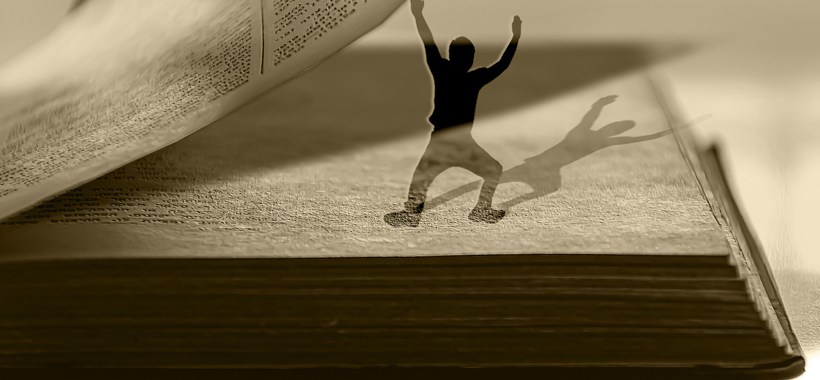
Great reminder from Ken Brosky. (What’s with the image, you may ask? Visualize it as all the hoops your protagonist has to jump through.)

————

Your audience won’t remember the chapter where your hero took a breather. What’s memorable are the forces of antagonism, and how your hero reacted.

Source link: The Biggest Mistake Even Expert Writers Make | Jane Friedman

CKBooks Publishing
Where Dreams Become Reality

Writing a Memoir? Read This First

Some key information for people thinking of writing their memoir and trying to figure out if they want to sell it to a publisher or to indie publish.

—————————-

Memoirs are designed to share your experiences with the world. However, this makes them incredibly hard to market if you aren’t a celebrity, influencer, or…

Source: Writing a Memoir? Read This First


CKBooks Publishing
Where Publishing Dreams Become Reality

Getting To Know Your Characters

Michele Regnold’s posts talks about about getting to know your characters by interviewing them. This is definitely a worthwhile exercise. If you want to read a book on the subject, I enjoyed Taking Your Characters to Dinner by Laurel A. Yourke.

Here is another idea from Tracy Helixon: https://www.mvwg.org/blog/getting-to-know-your-characters-through-monologue


CKBooks Publishing
Where Publishing Dreams Become Reality

The 6 Challenges of Writing a Second Novel 

When we think too much about our writing, sometimes it can stall our progress. K. M. Weiland discusses some of the things that can hinder writers. The nice thing is, she also gives us some ideas around this.

Though with item #6 in the making writing easier list, I’m not sure focusing on what you’ve learned from book #2 is quite right. I would say acknowledge what you’ve learned (you’ve learned a lot writing that first book), but then forget it. You really don’t need to consciously think about what you’ve learned while writing book 2. And I’d say it will hinder you to think about it. Just write with no expectations. There is nothing more damning for a creative project than letting expectations take hold.

As she says in item #1 – no one has to read this.

Also, what you’ve learned will creep into your writing all on it’s own. And the more you write, the more this will happen. And if it doesn’t, then you always have draft #2, #3, #4… to figure it out.

You can do this!

———————————

Writing a second novel can often be surprisingly harder than the first one. Check out six challenges sophomore writers often face.

Source: The 6 Challenges of Writing a Second Novel – Helping Writers Become Authors